-
Full Spectrum vs Broad Spectrum vs Isolate: Which CBD Extract Is Right for You?
 October 20, 2026
-
CBD Lotion Ingredients Explained
 September 23, 2026
-
CBD Gummies Strength Guide
 September 19, 2026


Will CBD Oil Show Up on a Drug Test?
CBD oil can lead to a positive drug test, even though standard workplace screenings generally do not look for CBD itself. The concern is THC, the compound that drug tests target directly or through its breakdown products. A CBD oil containing THC may therefore put you at risk, including when that THC is present in small amounts or missing from the label.
Full-spectrum CBD contains THC. Broad-spectrum CBD is typically processed to remove THC, while CBD isolate contains purified CBD rather than a range of hemp compounds. However, neither a product category nor a “THC-free” label guarantees a negative drug test.
If passing a screening is essential for your employment, avoiding CBD products is the most cautious choice. Here is what to know before relying on a label, switching products, or planning around an upcoming test.
Does CBD Show Up on a Drug Test?
The answer depends on whether you mean CBD itself or the CBD product you use.
Standard workplace drug tests generally screen for specified substances, including marijuana-related compounds, rather than cannabidiol. The U.S. Department of Transportation states that its program requires testing for marijuana, not CBD.
That distinction matters because a bottle labeled “CBD oil” may contain more than CBD. Depending on how it is made, the oil can include THC, other cannabinoids, and additional ingredients.
A positive marijuana result after using CBD oil is therefore not necessarily the test confusing CBD with THC. It may reflect actual THC exposure from the product.
What Does a Marijuana Drug Test Detect?
Urine testing commonly looks for a metabolite produced when the body processes THC. Other testing methods may look for different markers of THC exposure. This means a screening is not simply checking whether you currently feel intoxicated. Someone who notices no intoxicating effects from CBD oil can still have consumed THC that becomes detectable.
The practical question is not just “Does CBD show up on a drug test?” It is “Could this particular CBD product expose me to THC?”
Full-Spectrum CBD Oil and Drug Test Risk
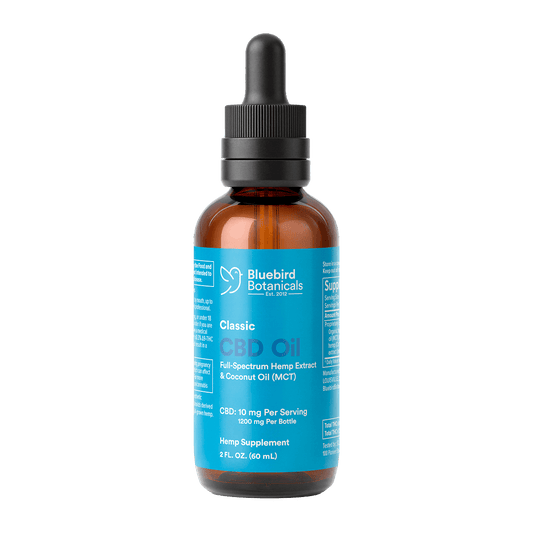
Full-spectrum CBD oil contains multiple compounds from hemp, including CBD and THC. Its THC content makes it a concern for anyone subject to marijuana screening.
Small amounts should not be mistaken for no risk. Research examining commercial CBD products notes that there is no widely accepted daily or total amount of THC that guarantees someone will remain below drug-testing thresholds.
Why Repeated Use Matters
Repeated use can increase cumulative THC exposure. The amount of oil taken, its THC concentration, how often it is used, and individual differences all influence the situation.
For example, two full-spectrum oils may contain similar amounts of CBD but different amounts of THC per serving. Choosing a product based only on its advertised CBD strength does not tell you enough about screening risk.
A low THC percentage is not a promise that you will pass. If your employment depends on a negative result, full-spectrum CBD is not a dependable option.
Broad-Spectrum CBD Drug Test Risk
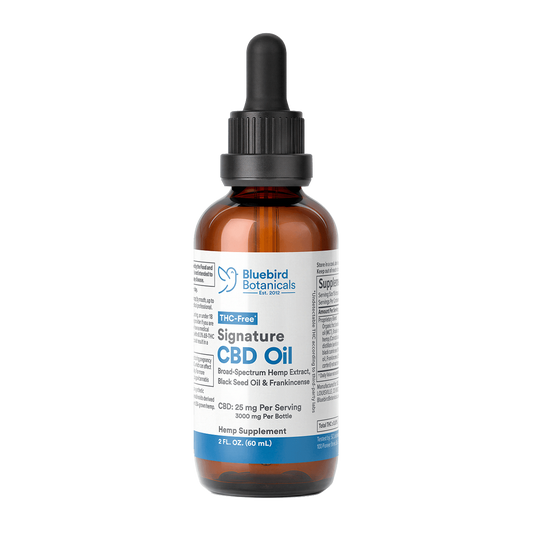
Broad-spectrum CBD usually contains CBD and other hemp compounds, with processing intended to remove THC. That makes it different from full-spectrum oil, which intentionally retains THC.
In principle, removing THC reduces the source of marijuana-testing risk. In practice, the result depends on the finished product, the accuracy of its labeling, and the sensitivity of the laboratory analysis.
Can Broad-Spectrum CBD Cause a Positive Test?
A genuinely THC-free broad-spectrum product should not cause a marijuana-positive result because of CBD alone. However, a product sold as broad-spectrum may still contain residual or undeclared THC.
That is why there is no reliable yes-or-no answer about broad-spectrum CBD and drug tests based on the product name alone. The concern is not hypothetical: a 2022 analysis of 80 commercially available CBD products found detectable THC in five of the 21 products labeled “THC-free.” That finding does not describe every product on the market, but it shows why label claims alone cannot guarantee screening outcomes.
Broad-spectrum should be understood as a description of the intended formulation, not certification that a product is suitable for every drug-testing program.
CBD Isolate and Drug Test Risk
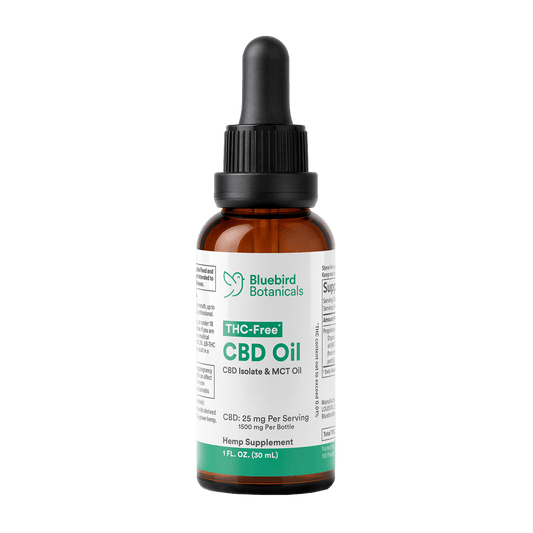
CBD isolate is purified CBD, rather than an extract intended to preserve multiple cannabinoids.
If an isolate product genuinely contains CBD without THC, CBD itself is unlikely to produce a positive standard marijuana urine test. The Substance Abuse and Mental Health Services Administration (SAMHSA) has nevertheless cautioned that products sold as CBD may contain THC, which can create employment risks for people subject to testing.
Is CBD Isolate Guaranteed to Pass?
No retail CBD isolate product can guarantee your individual test result.
The distinction is between the ingredient and the finished item. Purified CBD does not carry the same THC-related concern as a full-spectrum extract, but an inaccurate label or contaminated product can change that assessment.
For drug-tested consumers, isolate removes the intentional inclusion of THC. It does not eliminate the need to evaluate the product or the consequences of unexpected exposure.
How to Read a CBD Certificate of Analysis
A certificate of analysis, often called a COA, reports laboratory findings for a tested sample. It provides more useful information than broad statements such as “premium hemp” or “THC-free.”
Before purchasing, look for:
- A report matching the product’s batch or lot number
- Testing performed by an independent laboratory
- Results identifying THC, not just total CBD
- Clearly stated units and testing limits
- A complete report rather than a cropped promotional image
“Not Detected” Does Not Mean Absolute Zero
A result marked “ND,” or “not detected,” generally means the laboratory did not detect the substance above its method’s detection limit. It does not establish that absolutely none exists.
A COA can help you assess what was found in the tested sample. It cannot promise that you will pass a workplace screening.
If THC results or testing limits are unclear, ask the manufacturer to explain them. Do not interpret missing information as proof that a product contains no THC.
What Drug-Tested Professionals Need to Know
CBD and drug test concerns become especially important when a positive result could affect employment, professional eligibility, or safety-sensitive duties.
Commercial drivers and other DOT-regulated safety-sensitive employees face a particularly clear rule: CBD use is not accepted as a legitimate explanation for a laboratory-confirmed marijuana-positive result. A medical review officer will still confirm a result as positive even if an employee reports using only CBD.
Drivers and Other Safety-Sensitive Workers
For these workers, buying CBD legally or choosing a hemp-derived product does not establish that it is compatible with testing requirements.
Before using any cannabinoid product, review your employer’s policy and the rules governing your role. Don't assume a coworker’s experience or a retailer’s reassurance applies to you.
Healthcare, Public Safety, and Other Tested Roles
Testing policies can differ by employer, position, and jurisdiction. Workers in healthcare, public safety, government, and other screened occupations should check their own requirements rather than assuming every workplace follows the same rules.
Competitive athletes should similarly consult their governing organization’s current requirements. Product marketing is not a substitute for the policy that determines your eligibility.
Can You Stop CBD Before a Drug Test?
There is no universal waiting period that guarantees a negative result after using a THC-containing CBD product.
The product’s THC content, frequency of use, testing method, and individual factors make fixed promises unreliable. Switching from full-spectrum oil to broad-spectrum or isolate shortly before a screening does not immediately undo previous THC exposure.
If a test is approaching, stop using any potentially THC-containing product rather than relying on an advertised clearance timeline. Review the applicable testing policy and ask your employer or program administrator about the process.
In Conclusion
CBD products are generally not the target of standard workplace marijuana testing, but CBD oil can contain THC that produces a positive result.
Full-spectrum oil intentionally includes THC. Broad-spectrum products aim to remove it. Isolate contains purified CBD. Those differences matter, but labeling errors and unexpected THC mean none should be treated as a guaranteed pass. To compare the three extract types in more detail, see our guide to full spectrum vs broad spectrum vs isolate, or browse our THC-free CBD products and their batch-specific lab results.
When the consequences of a positive test are significant, prioritize the requirements of your testing program over product claims. Avoiding CBD products is the most cautious way to avoid CBD-related THC exposure.